
AJAX - HTTP/2 and Multiplexing Effects on AJAX


1. Why do we even need HTTP/2 for AJAX?
AJAX works by sending multiple asynchronous requests from the browser to the server (for data, images, comments, notifications, etc.).
In modern web apps:
-
One page can trigger 10–50 AJAX calls
-
Performance depends heavily on how fast these requests travel
This is where HTTP/2 makes a big difference.
2. How AJAX worked with HTTP/1.1 (Old Way)
Key limitations of HTTP/1.1:
-
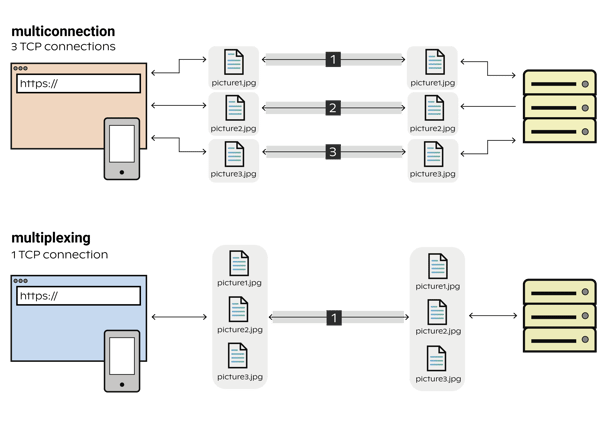
Each request often needs its own TCP connection
-
Browsers limit connections (usually 6 per domain)
-
Requests are handled one after another on a connection
Problem: Head-of-Line Blocking
If one request is slow:
-
All following requests wait
-
Page feels slow even if data is small
Example:
Request 1 → waiting
Request 2 → blocked
Request 3 → blocked
This directly affects AJAX-heavy applications.
3. What is HTTP/2? (Simple Definition)
HTTP/2 is a newer version of HTTP designed to:
-
Reduce latency
-
Improve performance
-
Handle multiple requests efficiently
AJAX still works the same conceptually, but transport is much smarter.
4. What is Multiplexing in HTTP/2?
Multiplexing means:
Multiple requests and responses are sent simultaneously over a single connection, without blocking each other.
This is the most important feature for AJAX.
5. How AJAX Works with HTTP/2 (New Way)
Instead of:
-
One request → one connection → wait
HTTP/2 allows:
-
One TCP connection
-
Many AJAX requests at the same time
-
Responses can arrive out of order
Example:
Connection 1:
  ├── AJAX Request A
  ├── AJAX Request B
  ├── AJAX Request C
No waiting. No blocking.
6. Key Differences (Exam-Friendly Table)
| Feature | HTTP/1.1 | HTTP/2 |
|---|---|---|
| Connections | Multiple | Single |
| Request handling | Sequential | Parallel |
| Head-of-line blocking | Yes | No (at HTTP level) |
| AJAX performance | Slower | Faster |
| Network usage | Higher | Optimized |
7. Why Multiplexing Improves AJAX Performance
1. Faster Page Load
-
AJAX calls do not wait for each other
-
UI updates appear quicker
2. Better Use of Network
-
No need for multiple TCP handshakes
-
Less overhead
3. Real-Time Applications Improve
-
Chats
-
Dashboards
-
Live notifications
All benefit directly from multiplexed AJAX calls.
8. Important Note for Students (Very Common Confusion)
❗ AJAX code does NOT change
fetch("/api/data");
Multiplexing happens:
-
Automatically
-
At the protocol level
-
If the server supports HTTP/2
So:
-
Developer writes same AJAX code
-
Browser + server optimize delivery
9. Are There Any Downsides?
Yes, but minimal:
-
If one TCP connection fails, all streams stop
-
Solved mostly by modern network recovery
-
Still much better than HTTP/1.1 for AJAX-heavy apps
10. One-Line Exam Definition
HTTP/2 multiplexing allows multiple AJAX requests and responses to be transmitted concurrently over a single TCP connection, eliminating request blocking and improving performance.
11. Real-World Example
Imagine a dashboard page making AJAX calls for:
-
User profile
-
Notifications
-
Messages
-
Analytics data
HTTP/1.1: Some data waits
HTTP/2: All data loads together smoothly
12. Why This Topic Is Important for Exams & Interviews
-
Shows understanding of modern web performance
-
Frequently asked in AJAX + networking questions
-
Explains why newer sites feel faster
