
HTML - Meta Tags for SEO and Social Media (Open Graph)
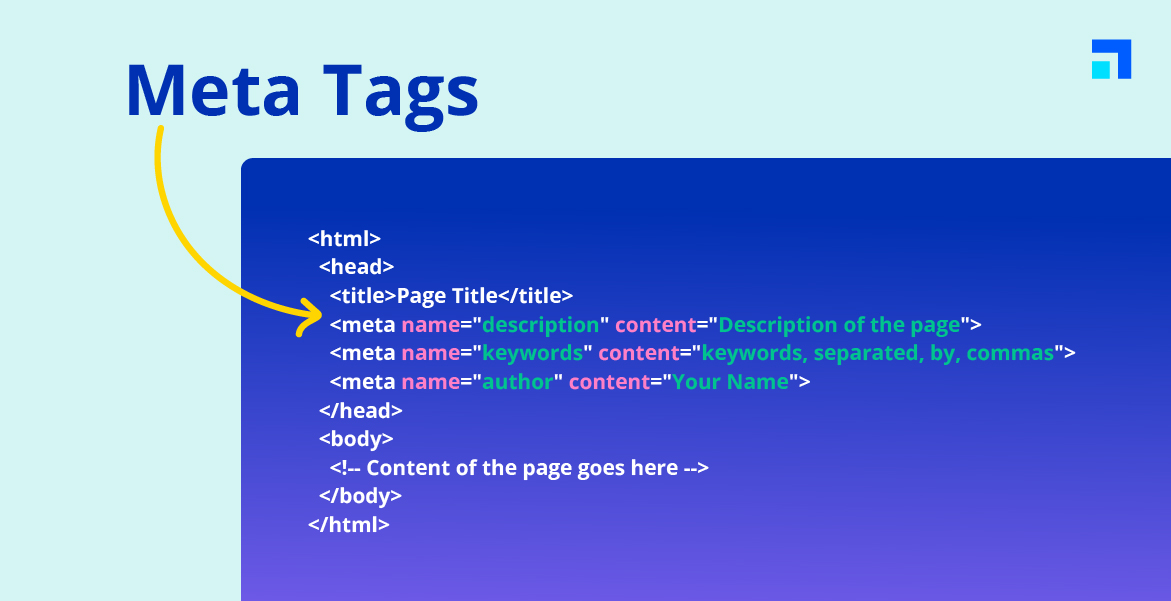
Meta tags are small pieces of information placed inside the <head> section of an HTML page. They do not appear on the webpage, but they tell search engines and social media platforms what the page is about. Proper meta tags improve SEO, click-through rate, and link previews.
1. Important Meta Tags for SEO
These tags help search engines understand and rank your page.
Title Tag
<title>Best Web Development Tips for Beginners</title>
-
Appears in Google search results
-
Most important SEO tag
-
Keep it under 60 characters
Meta Description
<meta name="description" content="Learn beginner-friendly web development tips with clear examples and best practices.">
-
Shown below the title in search results
-
Improves clicks (CTR)
-
Keep it under 160 characters
Meta Keywords (Mostly Obsolete)
<meta name="keywords" content="HTML, CSS, JavaScript">
-
Not used by Google anymore
-
Can be ignored for modern SEO
Viewport (Mobile SEO)
<meta name="viewport" content="width=device-width, initial-scale=1.0">
-
Essential for mobile-friendly websites
-
Impacts search ranking
2. Open Graph (OG) Meta Tags for Social Media
Open Graph meta tags control how your webpage looks when shared on platforms like Facebook, WhatsApp, LinkedIn, Twitter (X).
Basic Open Graph Tags
<meta property="og:title" content="Learn HTML the Easy Way">
<meta property="og:description" content="Simple explanations of HTML concepts for students.">
<meta property="og:image" content="https://example.com/preview.jpg">
<meta property="og:url" content="https://example.com/html-guide">
<meta property="og:type" content="website">
What they do:
-
og:title→ Link title -
og:description→ Short summary -
og:image→ Preview image -
og:url→ Page link -
og:type→ Content type
Without these, social platforms guess, often incorrectly.
3. Why Meta Tags and Open Graph Matter
-
Better Google rankings
-
Professional social media previews
-
Higher click-through rate
-
Strong brand visibility
-
More control over how content is shared
4. Best Practices (Exam & Real-World)
-
Every page should have a unique title and description
-
Always include Open Graph tags
-
Use high-quality images (1200×630 recommended)
-
Avoid keyword stuffing
-
Keep meta content clear and relevant
-
Meta tags = communication with search engines
-
Open Graph tags = control social media previews
-
Both are essential for SEO + social sharing success
If meta tags are done right, your content gets found more and clicked more.
