
Digital Twins in Education: Bridging the Gap Between Classroom Learning and Real-World Technology
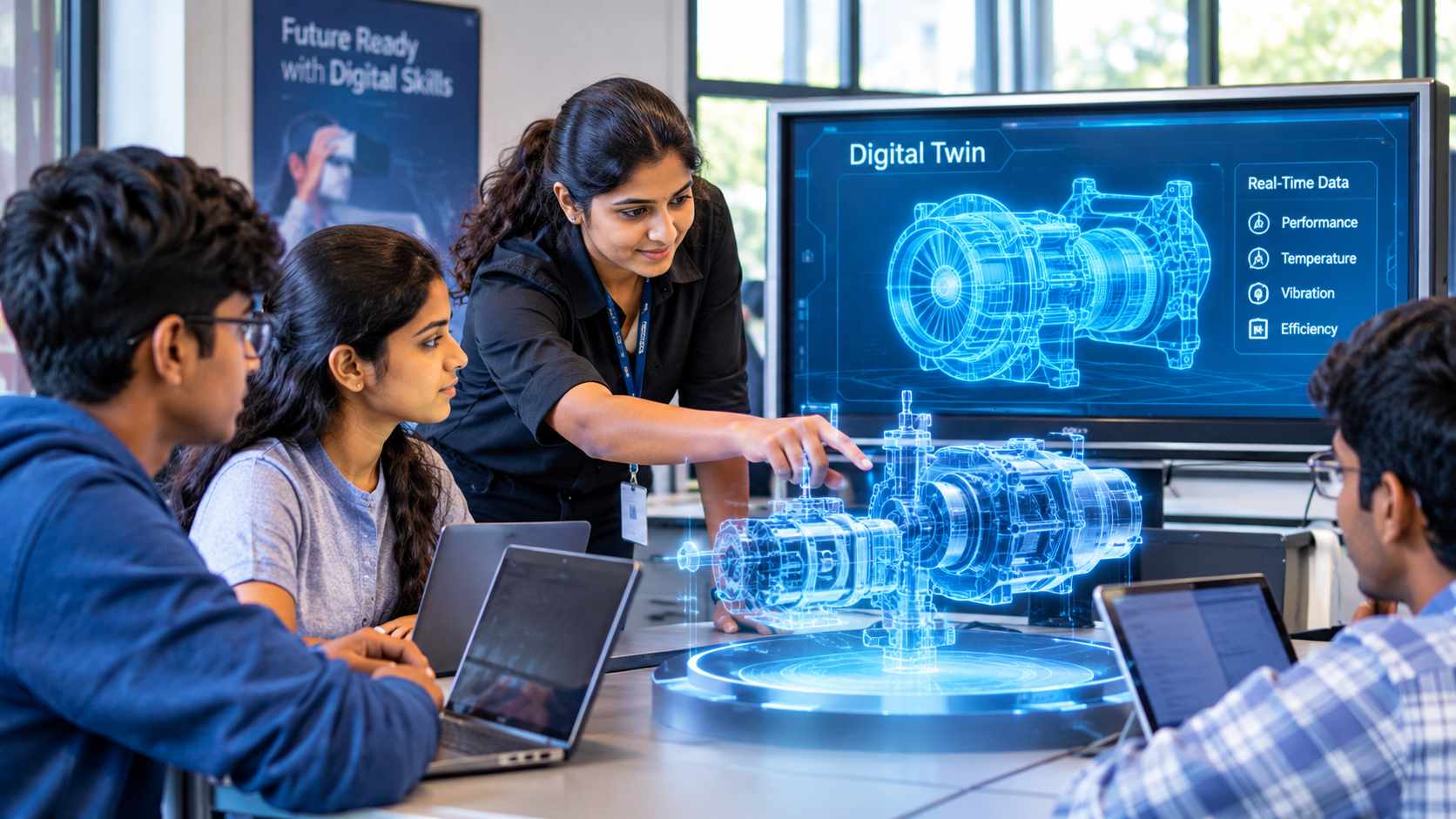
Digital twins are emerging as an innovative technology that could transform the way technical education is delivered and experienced. A digital twin is a virtual representation of a physical object, machine, system, or process that uses real-time data to simulate its behaviour and performance. By introducing this technology into educational institutions, students can explore complex systems, understand engineering concepts, and gain practical knowledge through interactive digital environments. This approach can make technical learning more engaging, accessible, and closely connected to modern industrial practices.
One of the biggest advantages of digital twins in technical education is the opportunity to provide hands-on learning without depending entirely on expensive physical equipment. Engineering and technology students can experiment with virtual machines, electrical systems, manufacturing units, and industrial processes in a safe digital environment. They can observe how different components function, identify potential problems, and test solutions without the risk of damaging equipment. This allows students to develop practical skills while gaining a deeper understanding of theoretical concepts taught in classrooms.
Digital twins can also support personalised learning by allowing students to learn at their own pace and explore different scenarios based on their interests and abilities. For example, mechanical engineering students can study the performance of engines, while civil engineering students can examine virtual building structures and analyse their strength under different conditions. Similarly, students studying computer science, automation, and electronics can understand how connected devices and intelligent systems operate. Teachers can use these virtual models to demonstrate difficult concepts, monitor student progress, and create more interactive learning experiences.
Another important benefit is the ability to prepare students for the demands of modern industries. As manufacturing, healthcare, construction, aerospace, and other sectors increasingly adopt digital twin technology, students familiar with these systems will have an advantage when entering the workforce. Educational institutions can collaborate with industries to develop realistic training environments that reflect actual workplace challenges. Such industry-oriented learning can improve problem-solving abilities, technical confidence, and employment readiness while helping students understand how emerging technologies are used in professional settings.
In the coming years, digital twins could become an important part of technical education by connecting theoretical knowledge with practical industry experience. Although implementing this technology requires investment in digital infrastructure, specialised software, and teacher training, its long-term educational benefits could be significant. By combining digital twins with artificial intelligence, virtual reality, and the Internet of Things, institutions can create advanced learning environments that encourage innovation and experimentation. Ultimately, digital twins have the potential to reshape technical education by preparing students with the knowledge and practical skills needed to succeed in an increasingly technology-driven world.
